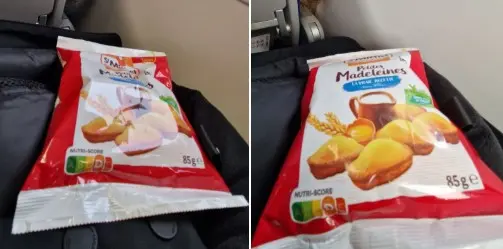
I would like to talk about an effect that emphasizes the importance of packaging integrity. Before my flight I grabbed a bag of Medeleines, soft biscuits, to enjoy during the 2,5h trip.
Can you see the difference between the packs? Package on the left is while we are still on the ground, and the one on the right when the plane was at cruising altitude. What really happened is the environment conditions changed and my package has stress exerted on the sealing. Will it hold or give up, allowing my Madeleines to dry out and change the taste and quality? Read more.....
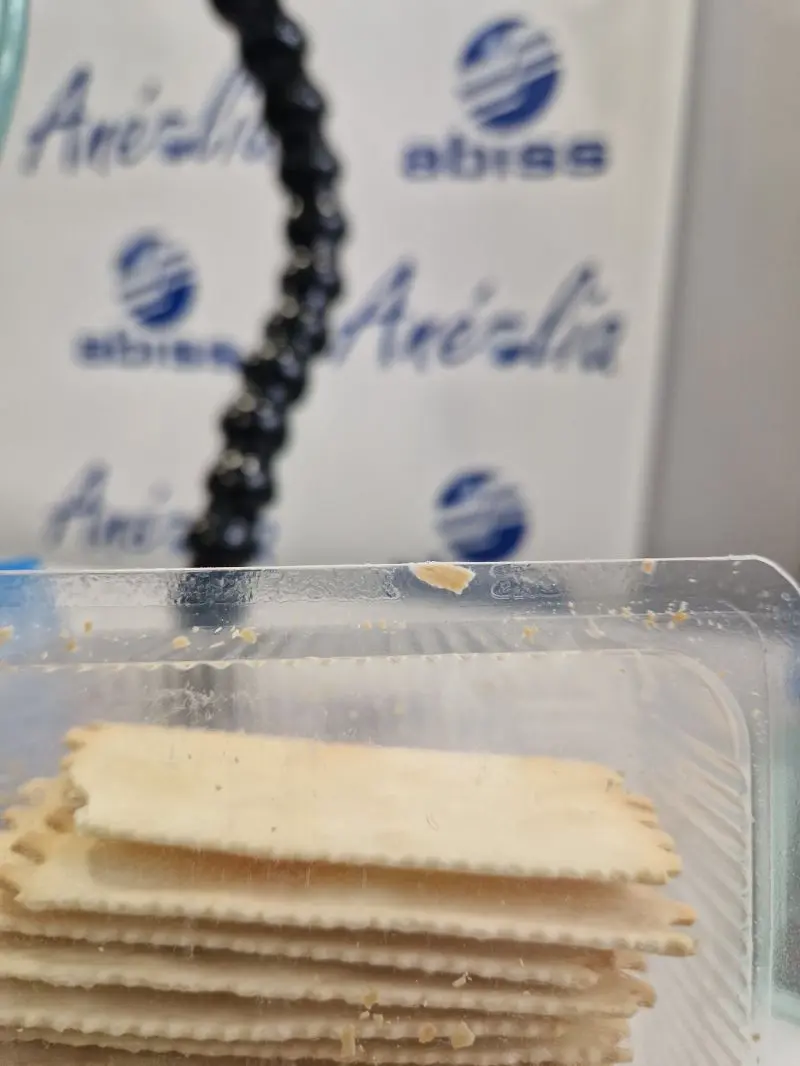
This one is for food auditors :)
Our production is certified according to __________. (you can enter by your own will IFS, ISO, HACCP, BRCGS, SQF, FDA...) We have audits from accredited companies and retailers regularly. Look at the paper!
And yet you buy a product like in the picture in retail. Who is at fault?
This is not a one off problem but rather a systematic mistake. In a world where you fight to stay competitive by increasing speed, reducing cost of materials, automating all you can it is vital that you understand where the system can fail and how to prevent it by introducing proper measurement and process control.
What are the critical points of packaging process? Changeover of tools, materials (even suppliers of "same" material), change of speed (increase/decrease), environment, handling, cleaning of the machinery and tooling.
When you audit a food producer, don't neglect the packaging line and process. I know it is called end-of-line and you already get tired but it is equally important for food safety. Food and its packaging are one after that point. Packaging is protecting the food to keep the quality to our table.
Auditors, I am waiting for your comments, and I can will send you a free white paper for packaging integrity methods. We can help you understand the critical points better. If you want to learn more get in touch with us.....
Examples and application from real life

I saw a news article that foodborne E.coli outbreak resulted in 9 deaths. Almost every week you can find similar news or food recalls from the market. It makes you worried and raises questions are we the next one exposed to danger in the food we eat?
In the past week I visited six food factories, from meat producers to confectionary and nutrition. All together we tested around 100 packages, measured leaks and where present, concentrations of O2 and CO2. Are you aware of the number of variables that influence the packaging integrity, that is supposed to keep food safe until end of shelf-life?
Packaging machine: speed, tools set, temperature and pressure of jaws, overall condition....
Packaging material: thickness, barrier layers, tension, gussets....
In case of MAP: time of injection, pressure, conditions of the gas mixer....
Logistics: conveying, secondary packaging, transport, environment conditions at point of sale (altitude, T/RH)...
Quality and Excellence
I don't even know from where to start this time.
Facts:
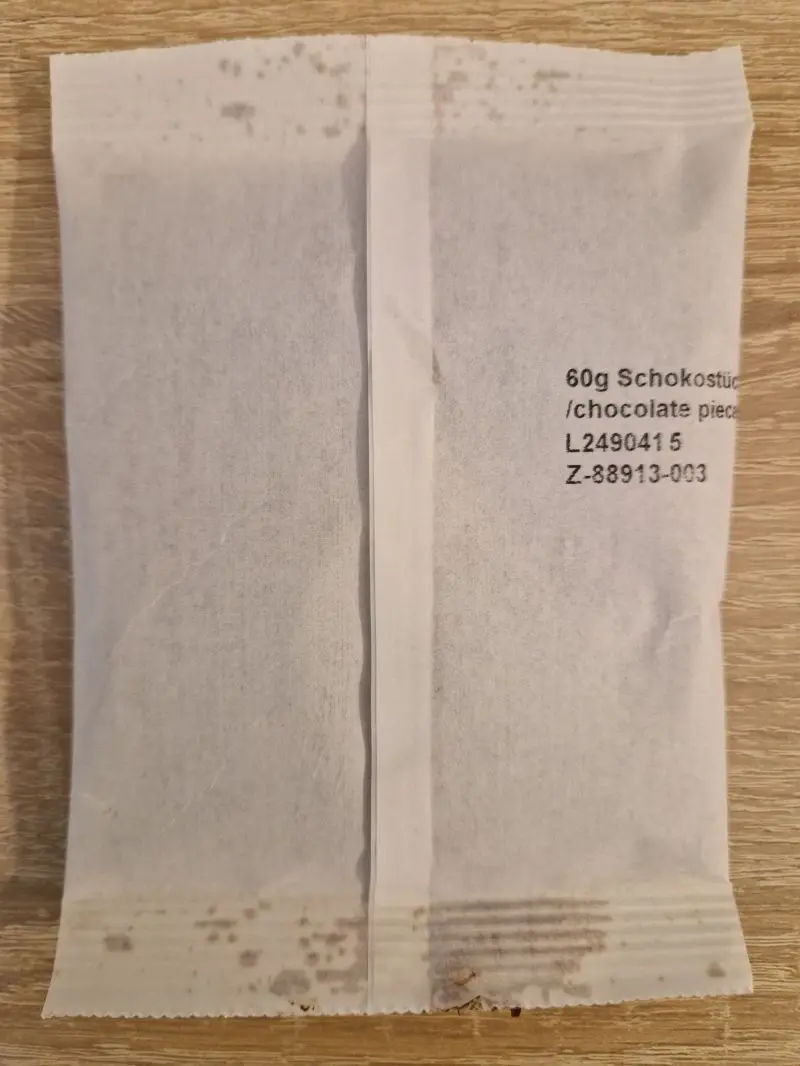
Retail package is a paper box, inside two paper bags (baking mixture and chocolate drops) and 12 paper molds for muffins.
All paper! Excellent, PPWR mission accomplished!
But at what cost?
Reality:
If the producer switched from other materials and used water bath in the past, clearly he cant use the same method. You cant place paper in water and have a conclusion....
Why leak measurement matters? In this example you can clearly see the problem in the sealing as the packaging material is white and content is dark. But ask yourself what if you can not see this because the material is not transparent? Are you ready to take the risk, or you act?
I know you might say this is a clear manufacturing issue, but it clearly shows that there is no systematic approach and in the hunt for speed, cost reduction and legislation food is exposed to risk.
How can we help you in this? Fill in the contact form for packaging integrity meeting and explanation how DIN 55508-1 standard handles these cases.